
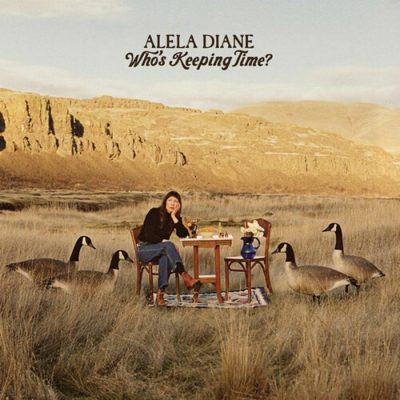
There’s something old fashioned about Alela Diane’s new album, Who’s Keeping Time. The music feels quite timeless, 11 songs existing in their own world. A world where musicians sit in a circle, face to face, playing at the same time. Recorded in the attic of her 1892 Victorian home in just ten days, this clutch of tunes seems to exist in their own space where the modern world has been stripped away, replaced by images and concerns more universal.
Yet these songs are still a part of the modern world as California, the opening song, makes clear. Rooted in the sound of an acoustic guitar and Diane’s whistling, she has returned to her old childhood home in Carson City. Caught up again in the swirl of her hometown, images play on her memories of the now vacant home. “Little sister/ In the shallows/ Laughing down the/ Hallways of my mind/ I hear the screen door/ Slam behind her/ California treat her kind.” Yet there’s also a sense of elusiveness at play, “All these faces/ Names escape me.” Recollections swirl until, finally, she is gone, but the memories remain.
Time changes things. On ‘Dusty Roses’ those changes are not always easy to bear. A finger picked guitar establishes a gentle beginning, but an electric guitar brings out the clouds of rain that haunt certain memories. Recounting a friendship where a wrong path was taken, now all that exists are shadows of what was. No longer in touch with her old friend, the light that was in this person’s eyes seems to have gone out, all that remains is a question, “Where has our girl gone?”
Diane’s songs are held together with simple glue. The sounds of violin, dulcimer, banjo, alongside washes of electric guitar, Wurlitzer and piano frame scenes that tumble and tangle like catching a lightening bug in a jar. Amongst the memories there is still room for more than a little bile. “Piss, Coffee, Blood or Wine” seems gentle enough, yet the lyrics reveal an anger that is palpable. “They line their pockets with our souls/ Men holding guns and hiding money/ Always at the church on Sunday.” Amidst the softness of it all, Diane holds a barely contained sense of fury at the hypocrisy and double standards of leaders more interested in appearances than in helping those less fortunate.
‘Endless Waltz’ is effectively a love letter to her grandparents. Having watched them in their old age, her memories strike a chord. “It’s beautiful and bittersweet to watch them waltz toward the unknown/ All the while the birds keep flying along on the wind/ And the piles of paper collect on our desks.” The dance of time simply can’t be stopped.
Throughout Who’s Keeping Time? There is a sense that although time rushes on, one still needs to be aware that although moments from passing on, there is still a need to appreciate as many of those moments as possible. Human beings may be imperfect, but as Alela Diane realises instants in time can be.